Healthcare
Leica Biosystems
AI-enabled digital pathology platform for diagnostics and precision medicine.
Paid
★★★★½
4.6
digital pathology
pathology AI
cancer diagnostics
companion diagnostics
slide scanning
biomarker discovery
precision medicine
laboratory automation
medical imaging
image analysis
workflow management
Bioptigen
oncology research
About Leica Biosystems
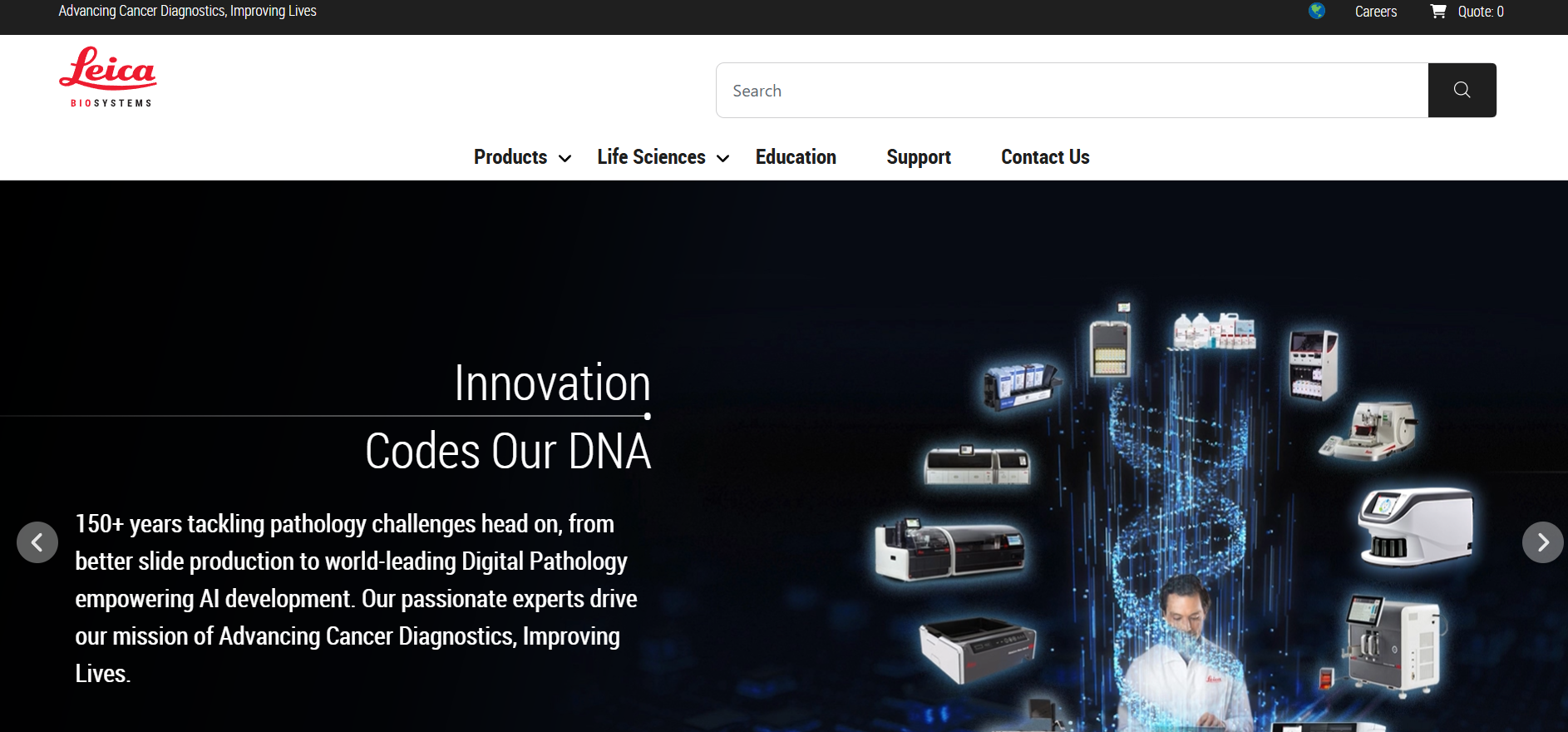
Leica Biosystems is a cancer diagnostics company that provides integrated solutions for pathology laboratories, including digital pathology, workflow automation, and AI-assisted diagnostics. Its portfolio combines slide scanners, image management software, companion diagnostics, and advanced analytics to support pathologists throughout the diagnostic process. Through acquisitions and partnerships, including technologies from Bioptigen and AI integrations within its digital pathology ecosystem, Leica Biosystems enables more efficient image analysis and precision medicine workflows. The company collaborates with pharmaceutical and biotechnology organizations to accelerate biomarker discovery and companion diagnostic development. Leica Biosystems is part of the Danaher Corporation family of companies and serves hospitals, laboratories, and research institutions worldwide.
Frequently Asked Questions
What is Leica Biosystems and how does it advance cancer diagnostics?
Leica Biosystems (a proud subsidiary of Danaher Corporation) is a global leader in anatomic pathology and cancer workflow solutions, operating with a mission of "Advancing Cancer Diagnostics, Improving Lives." It is unique in the industry as one of the few companies that owns and optimizes the entire clinical pathway—spanning from initial tissue biopsy and sample preparation to advanced staining, digital imaging, and reporting. By breaking down technical barriers between individual laboratory steps, the platform helps clinical and research networks streamline operations, increase throughput, and deliver confident, precise answers to over 1.6 million patient diagnoses each week.
What are the main components of Leica's Aperio Digital Pathology ecosystem?
The Aperio Digital Pathology portfolio serves as a comprehensive, modular framework designed to transition physical laboratories into high-efficiency digital workspaces. The ecosystem is categorized into three critical areas:
Scan: High-resolution digital imaging systems, featuring the state-of-the-art Aperio GT Elite high-throughput scanner. Equipped with embedded SmartScan™ technology, it uses barcode-driven automation to scan up to 103 slides per hour without manual sorting.
Manage: Scalable, secure data infrastructure (such as Aperio HALO AP) that allows pathology teams to easily organize, view, and remotely share complex Whole Slide Images (WSIs) across multi-site healthcare networks.
Analyze: Advanced computational tools, digital algorithms, and targeted analytical validation frameworks designed to assist with quantitative tissue analysis and biomarker research.
Scan: High-resolution digital imaging systems, featuring the state-of-the-art Aperio GT Elite high-throughput scanner. Equipped with embedded SmartScan™ technology, it uses barcode-driven automation to scan up to 103 slides per hour without manual sorting.
Manage: Scalable, secure data infrastructure (such as Aperio HALO AP) that allows pathology teams to easily organize, view, and remotely share complex Whole Slide Images (WSIs) across multi-site healthcare networks.
Analyze: Advanced computational tools, digital algorithms, and targeted analytical validation frameworks designed to assist with quantitative tissue analysis and biomarker research.
What is the Aperio AI Store and how does it integrate third-party applications?
The Aperio AI Store is a curated, deeply integrated clinical and research hub available natively within the Aperio HALO AP software platform. Rather than locking laboratories into a closed system, Leica Biosystems uses an open, secure digital architecture that embeds advanced artificial intelligence tools from multiple leading global developers (such as Indica Labs, Lunit, Histofy, Deep Bio, Mindpeak, and DiaDeep). This centralized portal allows pathologists to access specialized, domain-specific AI models for tissue segmentation, H&E staining interpretation, and precise oncology biomarker quantification directly within their active digital workspace, minimizing software hopping and reducing case turnaround times.
How does the platform utilize AI for automated scanner quality control?
To eliminate expensive slide rescans and manual inspection bottlenecks, Leica Biosystems integrates real-time, AI-driven quality control directly into its scanning hardware via the Aperio iQC software suite. When paired with high-throughput hardware like the Aperio GT Elite, the system leverages deep learning algorithms to automatically scan whole slide images for common artifacts—such as air bubbles, dust particles, tissue folding, or out-of-focus fields—while the slide is physically inside the machine. If a defect is flagged, the AI instantly alerts laboratory technicians, allowing them to fix the slide before it moves downstream into the diagnostic or research queue.
Similar Tools
More in Healthcare

Amboss
Healthcare
Medical knowledge platform for clinical decision support and education

Abridge
Healthcare
AI platform that turns medical conversations into clinical documentation.

Hinge Health
Healthcare
Digital musculoskeletal care platform with AI-guided therapy programs.

Calm
Healthcare
Meditation and sleep app for stress reduction and wellbeing.
📬 The 5 best new AI tools, every Tuesday
One short email. No spam, unsubscribe anytime.