
Writing & Content
Connected Papers
Visual literature exploration tool mapping citation connections and paper relationships dynamically.
Freemium
★★★★½
4.8
Academic Research
Visual Citation Mapping
Literature Review
Paper Discovery
Graph Visualization
About Connected Papers
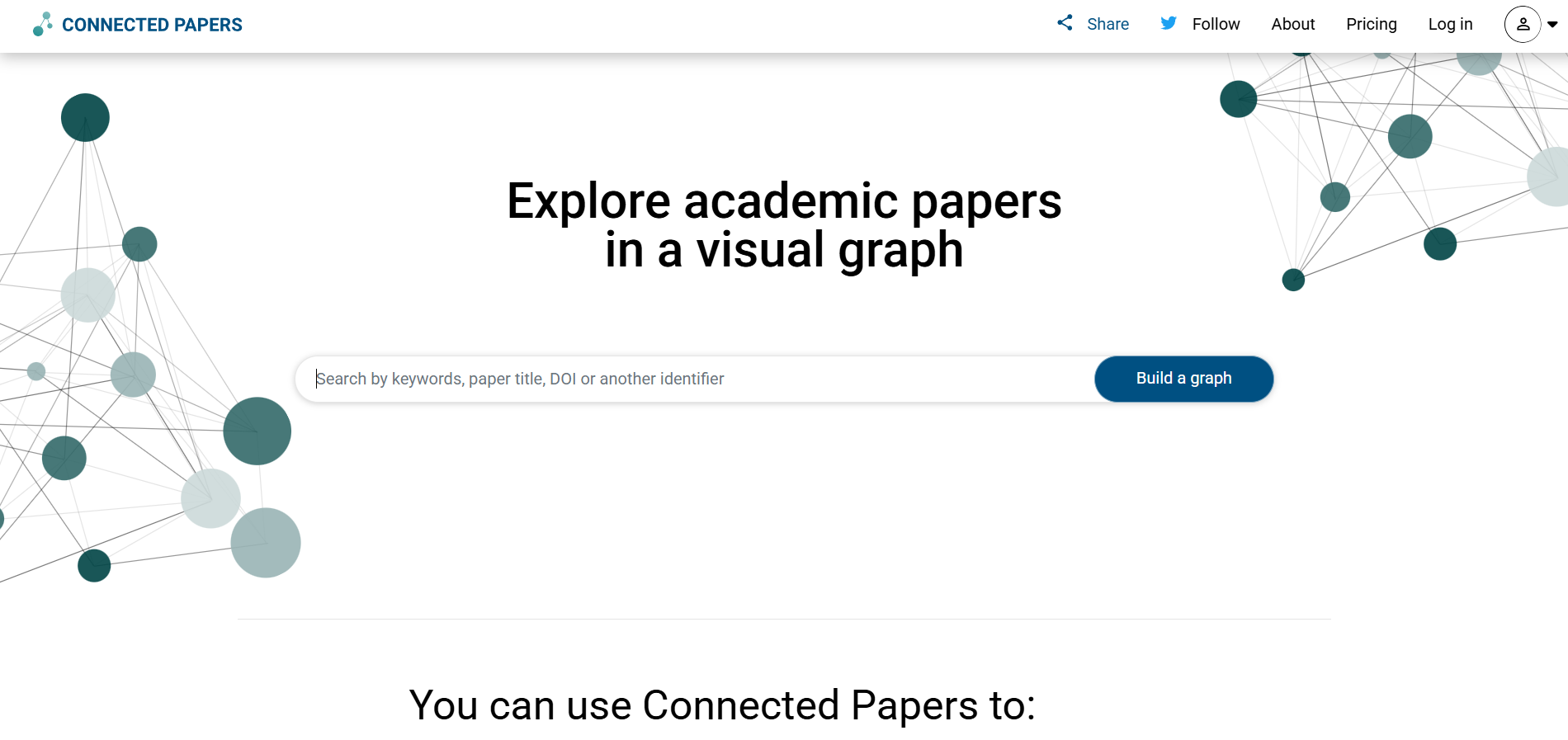
Connected Papers is a visual academic discovery platform that simplifies literature reviews for researchers and scientists. Rather than relying strictly on keyword queries or traditional citation trees, it uses semantic similarity models based on co-citation and bibliographic coupling. Users enter a single seed paper, and the platform analyzes thousands of related publications to construct an interactive, force-directed cluster graph. Node size reflects citation volume, node color represents publication year, and edge length indicates semantic relationship strength. The tool also generates lists of prior ancestor works and derivative literature review papers to ensure comprehensive research coverage.
Frequently Asked Questions
What is Connected Papers, and how does it assist academic researchers?
Connected Papers is a visual discovery tool designed to help academics, scientists, and students explore relevant literature. By building force-directed similarity graphs around a single seed paper, it allows researchers to visualize academic field dynamics, discover related works, and compile bibliographies faster than traditional search engines.
How does Connected Papers calculate similarity between scientific papers?
Unlike standard citation trees, Connected Papers determines relationships using co-citation and bibliographic coupling metrics pulled from the Semantic Scholar database. Two papers are mapped closely together if they share significantly overlapping references and incoming citations, even if they do not cite one another directly.
What are the Prior Works and Derivative Works features in Connected Papers?
The "Prior Works" feature analyzes the generated graph to highlight fundamental baseline papers that were most frequently cited by the papers in the cluster. The "Derivative Works" view highlights subsequent review papers, meta-analyses, and state-of-the-art studies that cite multiple papers from the generated map.
Similar Tools
More in Writing & Content

OverChat AI
Writing & Content
An all-in-one multi-LLM workspace aggregating ChatGPT, Claude, Gemini, and image models.
🧠
FreemiumClaude
Writing & Content
Helpful, harmless, and honest AI assistant.

ChatGPT
Writing & Content
The world's most-used AI assistant.

Writer
Writing & Content
Enterprise full-stack generative AI platform powered by Palmyra foundation models and graph RAG.
📬 The 5 best new AI tools, every Tuesday
One short email. No spam, unsubscribe anytime.